Photini’s (or Photina) story has resonated with me since I was an adult. She was tired of life and its ridiculous rules, searching for something to slake her thirst. The day that she came to faith changed everything. I don’t think she knew what she was looking for; she just knew that what she had wasn’t it. So she kept searching.
Have you ever been there? Where you know that you are unsatisfied, but you don’t know why or what it is you are missing? Like you are aimlessly wandering on the earth with no end goal. I have been there.
Who is Photini? She’s the Samaritan woman that Jesus met at the well. Do you remember that story? It can be found in John 4:1-30. Below is a refresher on the story; however, I also recommend reviewing the scripture referenced.
The Story
Jesus and his disciples are travelling to Galilee. On the trip, they pass through Samaria, and he decides to rest at a well outside the town while the disciples go to buy food. So as he’s sitting there, here comes Photini to get her water in the middle of the day. And Jesus turns and asks for a drink. Photini looks at him and asks if he’s asking her. Jesus opts to use the opening and starts a theological lesson with her. By the time he’s done talking to her, she realizes that he must be the messiah and runs off to tell the whole town!
About Her
Before examining the context, there are a few key points we need to address to gain a full understanding of the situation. Because she arrived at noon (the hottest part of the day), it can be safely said that she was socially ostracized. We aren’t sure why until Jesus addresses the fact that she’s living with a man who isn’t her husband and has had five husbands. This suggests that she was seeking fulfillment. How many times have we jumped from person to person because we believe they will fill the holes in our hearts? It seems that she had some understanding of theology and a spiritual awareness, even if her lifestyle didn’t reflect it. She was hungry but trying to fill up on something that couldn’t satisfy her. Have you ever felt that kind of hunger? I imagine she felt isolated, full of pain inside, and rejected by the world.
Let’s talk context.
- Cultural & Social Context
This interaction is socially unusual for a few reasons. It would have been very uncommon for men and women to casually talk in public, especially if they weren’t related. Because of Jesus being a Rabbi, it would have been expected that he would maintain more distance and separation from women.
Beyond that, she was Samaritan, which meant that she would have been considered questionable (on a good day). But then he asks for a drink from her cup. Drinking from her cup would have made him ritually unclean.
Her visit to the well at noon suggests that she was a social outcast. She wasn’t welcomed due to her mistakes and lifestyle choices. While having multiple marriages is common in our society, for her, it would have been unthinkable unless she was a widow or abandoned. However, having numerous marriages for those reasons would have resulted in her situation being considered tragic, rather than scandalous.
In case you were wondering, Samaritans and Jews did not get along. Samaritans were looked down on as they had intermarried with the Assyrians. They only accepted the Pentateuch (the first five books of the Bible). Most Jews would avoid Samaria when traveling, which tells you the level of tensions between these two.
- Locations
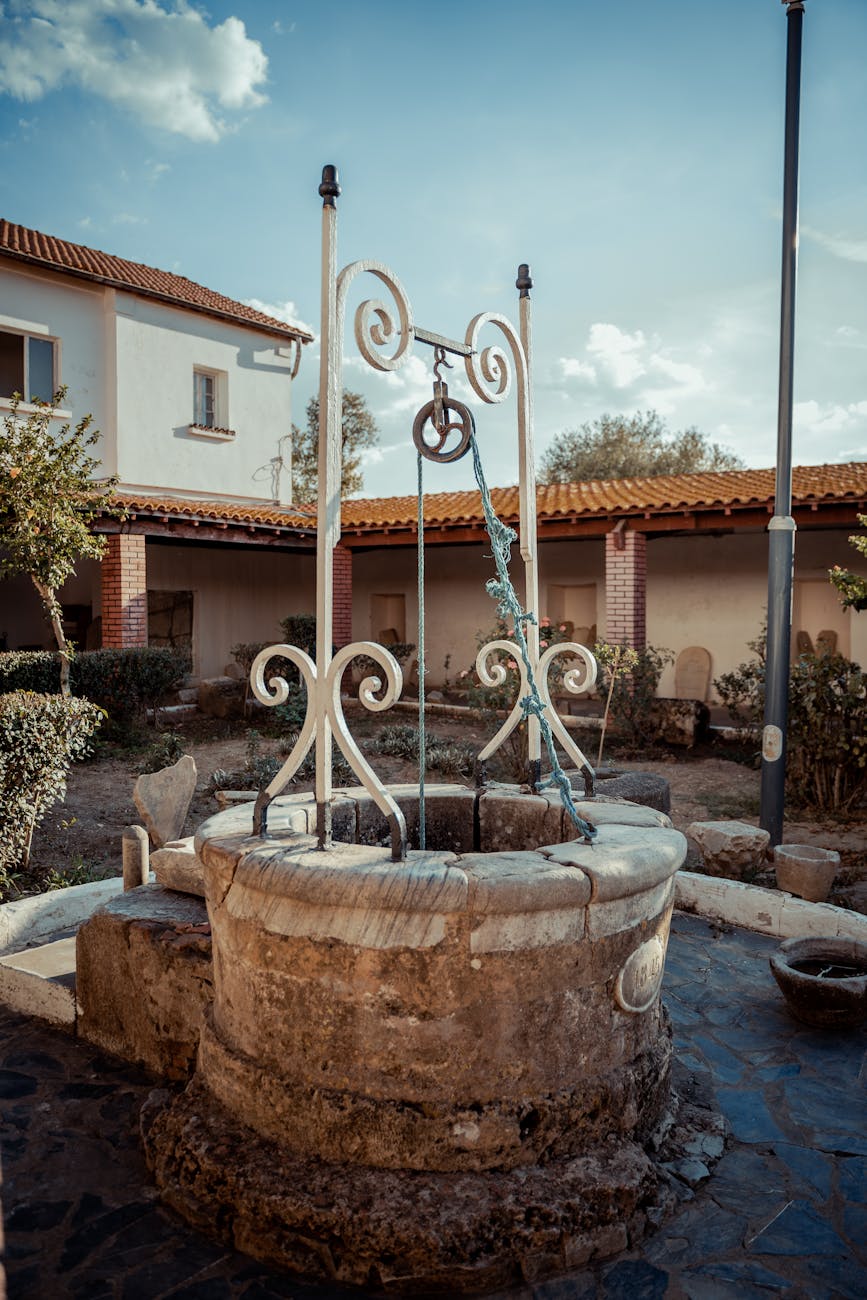
The Well – The location of the well is an interesting one. Jacob initially dug this well, and he gave the plot of land on which it was located to his son Joseph. This well was both a spiritual and a literal landmark.
Mount Gerizim – Mount Gerizim (the mountain she references in her discussion with Jesus) was a holy mountain for Samaritans. The Jews and Samaritans disagreed about where God’s true dwelling place was, and the Samaritans believed it was on Mount Gerizim.
Sychar – Located in Samaria, was a central site in Israel. It was a region between Judea (south) and Galilee (north). It is believed to be near Shechem (one of the earliest sites in Old Testament history).
Take Aways
- Only God fills. We spend a lot of time searching for things to fill the voids in our souls. We search for love, acceptance, or joy, but the only true source for these things comes from God. What void are you trying to fill, and what are you trying to fill it with? Is it sex, drugs, or money? Maybe it’s something less obvious, like TV or food?
- You must be empty before you can be filled. Jesus was able to talk to Photini and fill her “jar” because it was already empty. Just like he has to break us down to build us up, he must also empty us before we can be filled. “You cannot fill a cup which is already full” is one of my favorite concepts because it’s true. Sometimes, we need to let go of what we think we know to open the door for Jesus to reveal more to us.
- Stay sensitive. When searching for truth, hold fast to what is true, but remain sensitive to the way God is moving. Photini knew what truth was, even if she wasn’t practicing it, but she also stayed sensitive to what God was doing. She was able to have that deep conversation with God because she stayed tuned in.
- Conviction over Condemnation. It’s worth pointing out that Jesus didn’t condemn or deliberately point out her sin as he was talking to her. He didn’t ignore it, and he called it what it was, but there wasn’t condemnation or guilt attached to his words. God will never bring you condemnation or guilt. He will always bring you conviction towards repentance.
- God works outside cultural norms. As believers, we tend to put God in boxes. We limit his ability to work based on the knowledge we have and the limitations we observe with our own eyes. But God always works outside of cultural norms. He used Photini as a messenger to the rest of the town. Stay tuned in when you think God is working, and give Him space and room to work in the way He wants to – you might see something new! The disciples returned to see him working with Photini and didn’t say he couldn’t; they sat back and watched, giving him space and waiting to see the outcome.
Conclusion
The conclusion of Photini’s story is quite interesting. You don’t see anything more about her in the Bible, but she and her family were tracked through Orthodox Church history. She went on to minister in Carthage (modern day Tunisia) and then was called to return to Rome during the reign of Emperor Nero. He was known as the most brutal emperor in church history, despite not having the highest headcount when martyring Christians. She ended up giving her life for Christ, but not before she had converted her entire household and performed some remarkable miracles. You can read more about her here: Photini.
The point is that, regardless of the choices you have made, you are not defined by what you have done. God sent his son to die on the cross for you. He called you, washed you, and redeemed you. That is who you are. You are his child. He tells us in Isaiah 43:4: “Because you are precious in My sight, You are honored and I love you, I will give other men in return for you and other peoples in exchange for your life.”
Do you see that?! You are precious and honored, and He loves you so much that He gives others in exchange for you. He pays the ransom for you. All you have to do is accept that he has done this for you. To receive his love. The question remains – will you do that? And if you have – are you running to tell others about it? Did you leave your jar behind?
With all my love,
Hannah

 Whispers of Christ